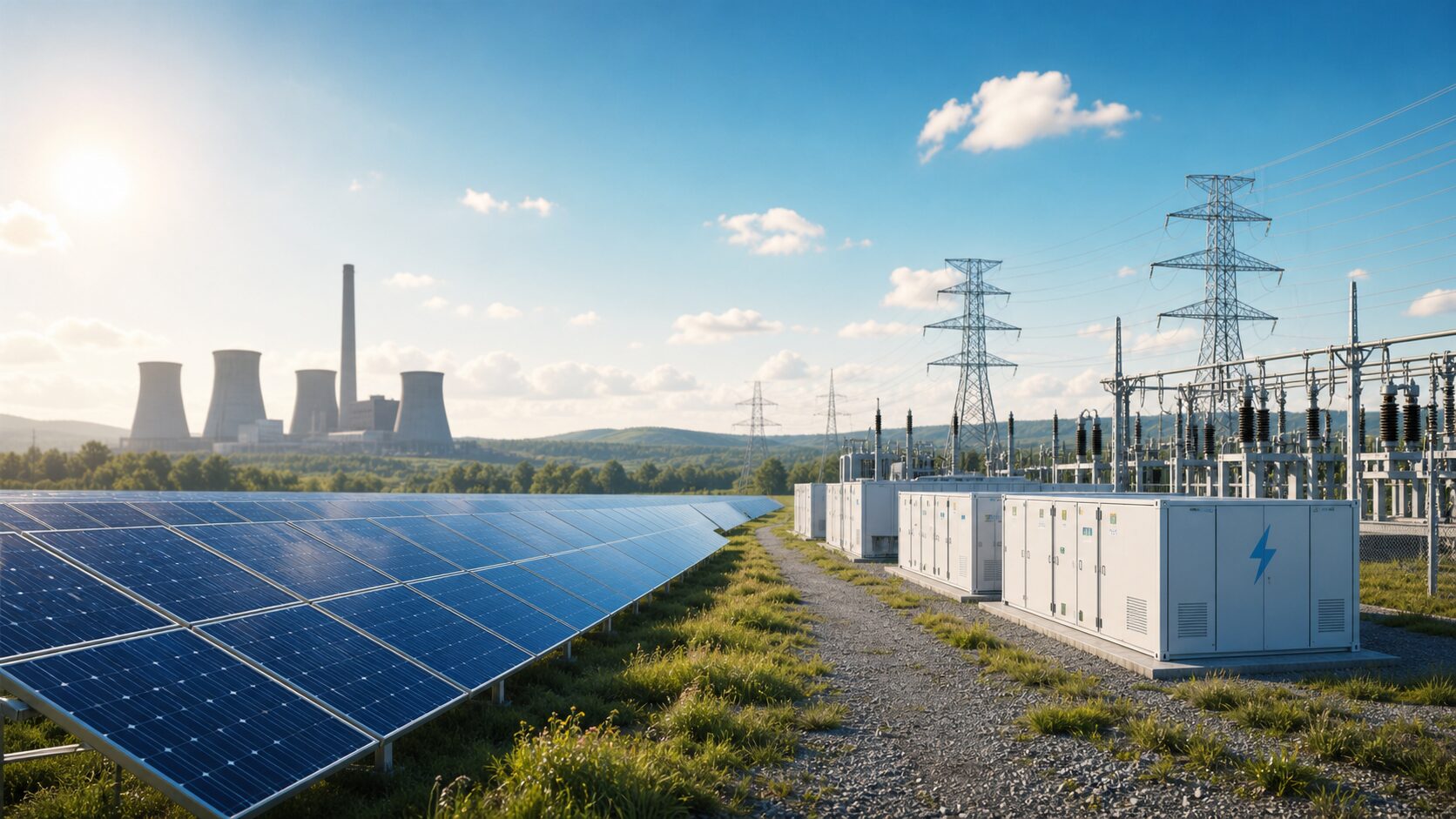
Solar power supplied more U.S. electricity than coal for the first time on a monthly basis. AP, citing data from energy think tank Ember, reported that solar accounted for 12.8% of U.S. electricity generation in May 2026, compared with 12.2% for coal. Solar also became the country’s third-largest electricity source for the month, behind natural gas and nuclear power.
The milestone is more than a climate headline. It is also an economic signal. U.S. electricity demand is rising again because of AI data centers, domestic manufacturing, transportation electrification, and electric heating. The central question is now how quickly low-cost power can be built, connected to the grid, stored, and delivered reliably.
What Happened
AP reported that solar has been the leading source of new U.S. power for five years. A report from the Solar Energy Industries Association and Wood Mackenzie said solar and battery storage made up most new generating capacity in the first quarter of 2026. ExpressNews also reported that solar and storage accounted for 91% of new U.S. capacity, with Texas leading the country in new solar additions.
Coal is not disappearing overnight, and it can still play a role during high-demand periods. But its market position is weakening. Fuel costs, aging plants, pollution rules, and investor return expectations all matter, even when federal policy tries to support coal. The May data shows that the power mix is changing faster than the political debate around it.
Economic Impact
The first impact is capital allocation. Solar, batteries, transmission, grid-control software, and demand-response services become more attractive when they are the resources actually being built. The investment story is no longer only about panels. It is about the systems that let variable power serve real demand throughout the day.
The second impact is electricity prices. Solar has no fuel cost and can be built relatively quickly. But it produces most strongly during daylight hours, so grids need batteries, transmission, flexible demand, and backup resources. The price benefit of solar depends on whether those supporting systems are built in time and paid for fairly.
The third impact is industrial strategy. AI data centers and advanced manufacturing need reliable power. Faster solar and storage deployment can ease pressure on power supply and help companies choose locations. If interconnection queues and permitting delays remain slow, however, cheap generation will not matter enough because it will not reach the places where demand is growing.
Social Impact
For households, the issue is whether the energy transition lowers bills without making the grid feel less reliable. More solar can reduce exposure to fuel-price swings over time. At the same time, grid upgrades and battery investments carry costs, and regulators must decide how those costs are shared among customers.
For workers and communities, the picture is mixed. Solar and storage create jobs in construction, maintenance, engineering, and grid operations. Coal-dependent regions, however, face harder questions about tax bases, local employment, and how to transfer skills into new industries. A cleaner power mix is easier to sustain politically when transition planning is visible and practical.
Public health may also benefit if coal’s share continues to fall, because coal generation is associated with air pollution and high carbon emissions. But the benefits should not be assumed to reach everyone equally. Low-income households, rural areas, and regions with weak transmission still need affordable and dependable electricity.
What To Watch
- Whether solar exceeding coal becomes a repeated monthly pattern and eventually an annual one.
- Whether batteries, transmission, and grid software scale quickly enough to support AI and manufacturing demand.
- Whether coal-region transition plans address jobs, tax revenue, and workforce retraining.
- How regulators allocate the costs of grid upgrades, reliability resources, and new interconnection.
The core lesson is that the U.S. power transition is now a mainstream business issue. Solar growth is linked to industrial policy, data-center investment, consumer bills, public health, and regional employment. The milestone matters because it shows where capital and infrastructure are already moving.
Sources
- AP News: Solar power hits new milestones in the US even as Trump boosts coal over clean energy
- ExpressNews: Texas leads U.S. in solar growth as the renewable tops coal for first time