GitHub’s developer tooling is moving beyond code completion and chat. More work can now be placed inside GitHub Actions as agentic workflows that read repository context, reason about routine tasks, and propose changes. That can save time, but it also raises practical questions about permissions, execution environments, cost controls, and review responsibility.
Recent GitHub updates point in the same direction: GitHub Agentic Workflows entered public preview, agentic workflows can use the built-in GITHUB_TOKEN, and Copilot CLI added an experimental /security-review command in public preview. For engineering leaders, these are not just feature announcements. They are a prompt to decide which tasks agents may handle, under which permissions, and inside which audit boundaries.
What GitHub Agentic Workflows changes
GitHub describes Agentic Workflows as a way to automate reasoning-based tasks such as issue triage, CI failure analysis, and documentation updates inside GitHub Actions. Teams define the automation in natural-language Markdown files, and the system compiles them into standard Actions YAML. Because the result runs as Actions, existing runner groups and policy constraints can continue to matter.
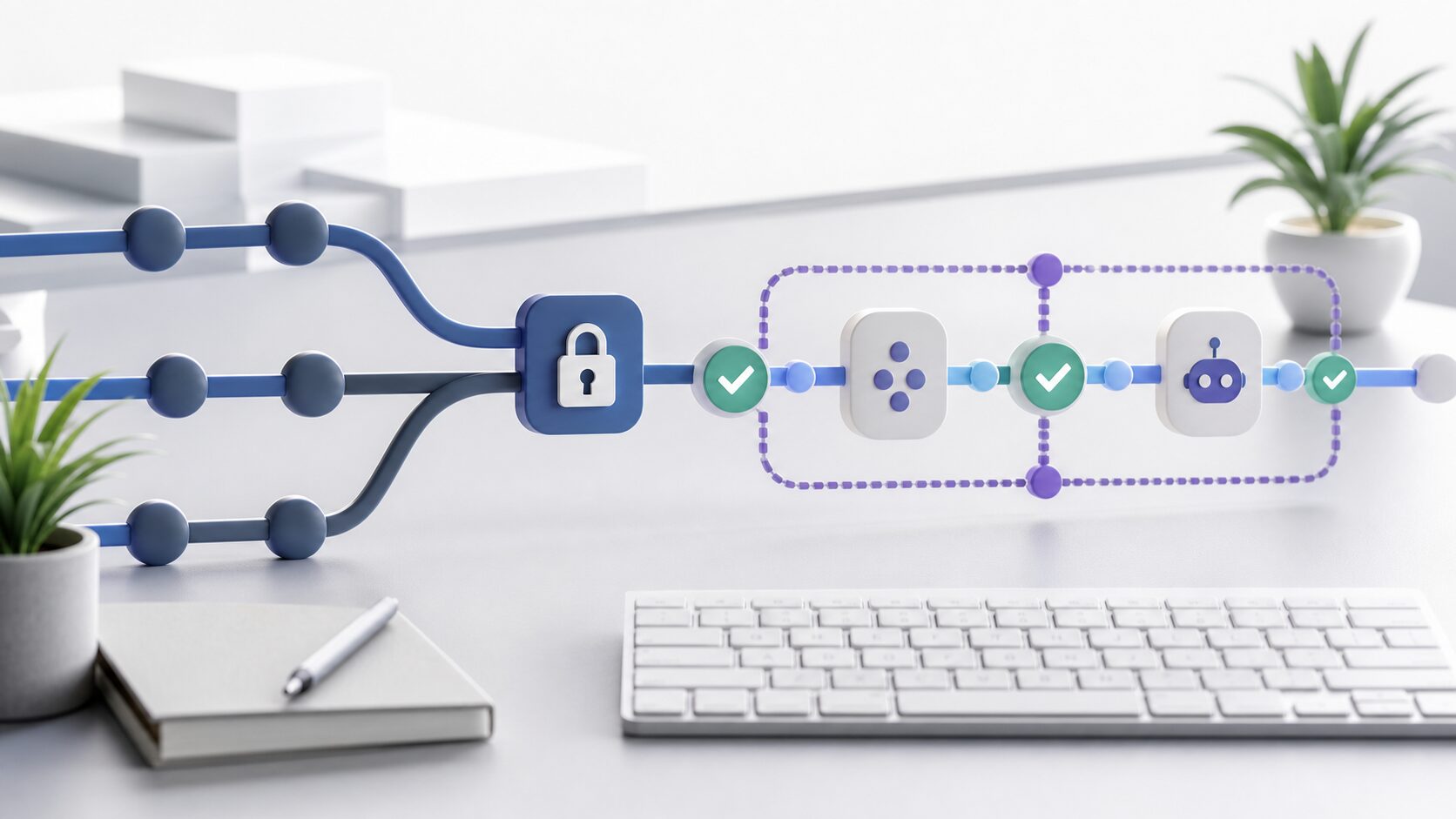
The key point is that this introduces a new actor into the development workflow. GitHub highlights read-only permissions by default, sandboxed containers, the Agent Workflow Firewall, safe output handling, and threat detection before proposed changes are applied. Adoption should therefore start with control design, not feature enthusiasm.
Using GITHUB_TOKEN reduces one risk but not every risk
GitHub also says agentic workflows can now use GitHub Actions’ built-in GITHUB_TOKEN. This reduces the need to create and store long-lived personal access tokens, which is a meaningful operational and security improvement for organizations managing many repositories.
That does not remove the need for permission design. Organization-owned repositories may bill consumed credits to the organization, and teams need to check Copilot policy settings, the copilot-requests: write permission, CLI extension updates, cost centers, and workflow-level cost controls. A simpler token model still needs explicit governance.
Copilot CLI security review belongs before the formal gates
The Copilot CLI /security-review command is described as an experimental public preview feature that analyzes local code changes and returns high-confidence security findings, severity and confidence signals, and suggestions developers can review in the terminal. GitHub says it is tuned for common vulnerability classes including injection, cross-site scripting, unsafe data handling, path traversal, and weak cryptography.
It should not replace CodeQL code scanning, Dependabot, secret scanning, or human review. Its useful role is earlier in the workflow: helping developers notice risky changes before they commit or before a pull request enters the full review pipeline.
Rules to define before rollout
| Area | Decision to make | Risk to avoid |
|---|---|---|
| Task scope | Define which work agents may handle, such as issue triage, CI investigation, dependency review, or documentation updates | Adding every convenient task without boundaries |
| Permissions | Start from read-only access and grant write permissions only for narrow use cases | Shared broad tokens or administrative permissions |
| Change path | Require pull requests, approval, tests, and threat detection before applying changes | Sending agent output directly to protected environments |
| Cost | Track spend by organization, cost center, and workflow where possible | Letting usage grow without budget ownership |
| Audit | Retain execution history, inputs, outputs, approvers, and diffs | Logging only whether a run succeeded |
Start with work that reads and organizes
The safest early use cases are tasks that do not modify repository state: summarizing failed CI logs, classifying old issues, preparing dependency update notes, or drafting documentation update suggestions. These tasks have visible value and limited blast radius.
The next step can be small pull requests for documentation or routine fixes. Even then, teams should separate write permissions, target branches, required reviews, tests, and access to secrets. The standard should not be whether the agent can do the work. It should be whether the organization can stop, review, and explain the work if the agent is wrong.
Checklist for engineering teams
- Decide which repositories may use Agentic Workflows and which may not.
- Declare
GITHUB_TOKENpermissions per workflow. - Review Copilot policy settings, billing ownership, cost centers, and usage limits.
- Route proposed changes through pull requests and human review.
- Keep CodeQL, Dependabot, secret scanning, and existing security gates in place.
- Do not let an agent handle secrets, customer data, or production configuration by judgment alone.
- Define stop conditions, notification paths, and accountable owners before rollout.
Automation is only as good as its controls
GitHub’s new direction can bring repetitive engineering work closer to where teams already manage code, issues, CI, and security checks. That can improve speed and consistency.
The risk is adopting the speed without the operating model. Teams that use Agentic Workflows or Copilot CLI should design the stop points, approval points, budgets, and audit records first. That is what turns agentic automation from an interesting demo into a maintainable engineering practice.
FAQ
How are GitHub Agentic Workflows different from regular GitHub Actions?
Regular Actions usually execute predefined steps. Agentic Workflows let teams define reasoning-based repository work in Markdown and run it on the Actions platform, such as issue triage or CI failure analysis.
Does GITHUB_TOKEN support remove the need for PAT management?
It can reduce reliance on long-lived personal access tokens, but workflow permissions, Copilot policy, billing, usage limits, and audit design still need explicit review.
Can Copilot CLI /security-review replace CodeQL?
No. Treat it as an early local review aid. It should complement CodeQL, Dependabot, secret scanning, and human review rather than replace them.
What should small teams try first?
Start with read-heavy tasks such as CI log summaries, issue classification, dependency impact notes, or documentation update proposals. These use cases make value and risk easier to measure.
Sources
- GitHub Changelog: GitHub Agentic Workflows is now in public preview
- GitHub Changelog: Agentic workflows no longer need a personal access token
- GitHub Changelog: Dedicated security review command now available in Copilot CLI
- GitHub Agentic Workflows documentation: Cost Management