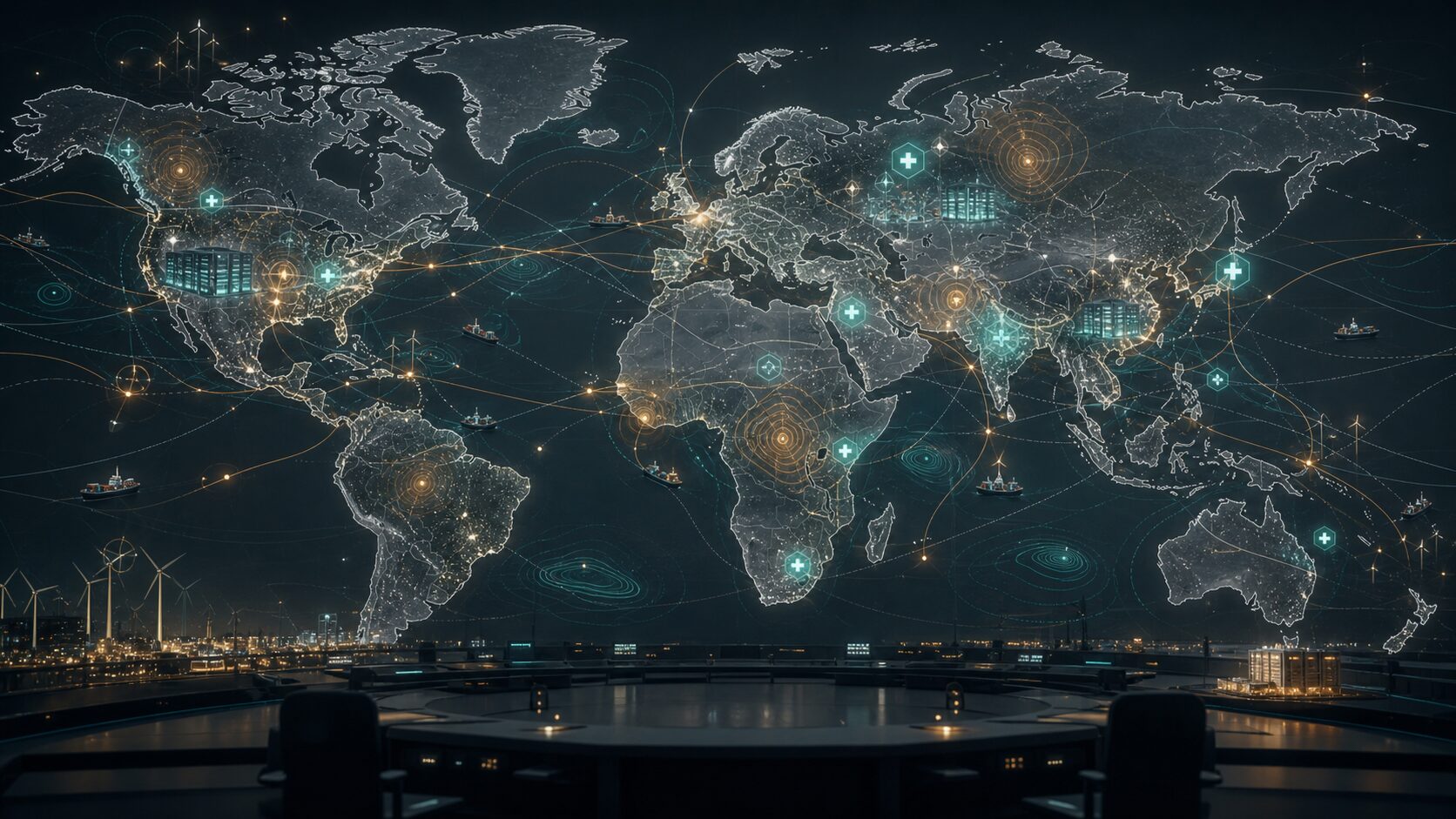
The world news cycle on July 3, 2026 showed how war, energy, climate, public health, digital infrastructure, and rights disputes are testing institutional capacity at the same time.
The stories differ in subject, but they share a practical theme: governments, companies, and citizens are making decisions under infrastructure and rule-of-law stress.
1. Russia’s fuel strain and the Ukraine front
AP reported that Ukrainian strikes on Russian refineries and energy infrastructure are putting visible pressure on domestic fuel supplies while Russia continues attacks across Ukraine.
The war is increasingly defined less by a single breakthrough than by fuel, logistics, air defense, drones, and the ability to sustain pressure.
Economically, fuel scarcity can raise costs for transport, farming, and military logistics while forcing Moscow to balance export revenue against domestic supply.
Socially, long fuel lines and intensified strikes deepen civilian anxiety.
The open question is the real scale of Russian military losses and regional fuel inventories, which require continued independent confirmation.
2. NATO vigilance around Poland
Reports that Russia may test NATO’s response around Poland or the Baltic region increased the sense of uncertainty in European security.
The reporting describes an intelligence concern, not a confirmed attack, but it points to the risk of hybrid tactics, missiles, drones, and disinformation being combined.
For companies, that risk affects logistics insurance, warehousing, and defense procurement planning in eastern Europe.
For residents near borders, the practical burden is preparedness, credible information, and resilience against rumor.
The next test is whether NATO deterrence, U.S. involvement, and observable Russian deployments move in the same direction.
3. Hormuz fees and navigation risk
Reports on Strait of Hormuz fees, approved routes, seized vessels, and stranded tankers left an energy-market risk that is hard to price.
The strait matters not only for crude oil and LNG but also for inputs linked to fertilizer supply.
Economically, waiting tankers, rerouting, and extra insurance can feed into energy and food-related costs.
Socially, importing countries feel that pressure through household power bills and food prices.
The legal basis and enforceability of any fee arrangement remain unclear, so actual practice by governments and shipping firms matters more than proposals alone.
4. Canada’s Pacific oil pipeline
Canada and Alberta moved forward with a proposed pipeline to carry oil to the Pacific Coast as Ottawa tries to reduce dependence on the U.S. market.
The route is expected to rely largely on the existing Trans Mountain corridor while preserving the northern British Columbia tanker ban.
Economically, access to Asian markets could narrow discounts on Canadian crude, but public financing and carbon-abatement costs remain central questions.
Socially, Indigenous rights, coastal protection, climate policy, and producing-province politics all shape whether the project can earn legitimacy.
The next markers are formal environmental review, financing, Indigenous consultation, and firm export commitments.
5. Europe’s heatwave death toll and infrastructure load
The Guardian reported that deaths in France rose by 2,025 during the late-June heatwave compared with the previous week.
Across Europe, high overnight temperatures also strained railways, roads, power systems, and health services.
Economically, shorter outdoor working hours, transport delays, cooling demand, and medical costs reduce summer productivity.
Socially, the burden falls hardest on older people, people living alone, households without reliable cooling, and outdoor workers.
Mortality figures may be revised later, so excess deaths, emergency calls, and power constraints should be read together.
6. Ebola treatment trials in the Democratic Republic of Congo
A trial has begun in eastern Democratic Republic of Congo to test treatment candidates for Bundibugyo Ebola.
Because this strain has limited established vaccine and treatment options, studying therapies in the outbreak setting is consequential.
Economically, the outbreak can disrupt mining, farm distribution, border trade, and aid budgets in an already fragile region.
Socially, displaced people, health workers, and contact-tracing teams carry the heaviest burden while insecurity limits care access.
The trial will take time; patient enrollment, standard care, and survival data after follow-up are the indicators to watch.
7. Drug-facilitated sexual assault networks
UK investigators and Europol-linked partners have reported international networks using online forums to plan drug-facilitated sexual assaults.
The abuse is especially hard to detect when offenders exploit trusted relationships and victims may have little or no memory of what happened.
Economically, cross-border investigations, digital forensics, victim support, and platform oversight require sustained public resources.
Socially, systems that separate domestic abuse, sexual violence, and online crime can miss the pattern of harm.
The next measure is not only arrests, but victim protection, evidence preservation, and whether platforms can detect these networks earlier.
8. Aceh caning and digital expression
In Indonesia’s Aceh province, a young couple was publicly caned after a Sharia court found them guilty over a kiss during a TikTok livestream.
Aceh has special authority to enforce Sharia rules, and the case exposed the tension between local autonomy and international human-rights standards.
Economically, tourism, investors, and digital platforms must account for local rules on expression and enforcement risk.
Socially, the case can chill youth expression online and deepen concerns over bodily safety and minority rights.
The question now is how Indonesia’s central and provincial authorities respond to international criticism and future digital-expression cases.
9. Data centers and local power costs
In Henrico County, Virginia, reports said schools and public agencies were asked to conserve power as data-center demand and electricity costs rose.
Cloud and generative-AI growth may look like a digital-industry issue, but it reaches residents through power grids, water, land use, and local budgets.
Economically, grid upgrades, fuel costs, and generation investments can squeeze public-service budgets and ratepayers.
Socially, promised tax revenue and jobs are colliding with distrust over noise, water use, bills, and opaque approval processes.
The next debates will center on interconnection costs, public disclosure, renewable power, and storage capacity.
10. Tesla driver-assistance liability
In the fatal Katy, Texas crash, a Tesla driver faces manslaughter charges while investigators examine the boundary between driver assistance and manual override.
Reports say vehicle data indicated the driver overrode the system with accelerator input, while criminal and civil proceedings continue.
Economically, automakers, insurers, and delivery platforms face pressure to clarify driver-assistance limits and user training.
Socially, the more automated a system sounds, the more public trust depends on clear responsibility after a crash.
NHTSA review, vehicle-log evidence, and manufacturer disclosure obligations are the next points to watch.
11. Microsoft country-by-country tax disclosure
New EU country-by-country disclosure brought fresh attention to the concentration of Microsoft pretax profit in Ireland.
The company has cautioned that the reporting system can involve double counting and difficult interpretation, so the figures should not be read in isolation.
Still, public country-level revenue, profit, and tax data give policymakers and investors a more concrete basis for debating digital-company taxation.
Socially, the disclosures sharpen questions about whether profits, employment, research, and public-service obligations line up fairly.
The next step is to compare other multinational filings and see which metrics investors and tax authorities treat as meaningful.
12. Tata and Apple supply-chain data exposure
Reuters-linked RSS items and Times of India reported an alleged Tata Electronics leak involving unreleased Apple component and manufacturing information.
Apple’s expansion in India supports geopolitical diversification, but it also raises the bar for supplier information security.
Economically, leaked design, procurement, or production plans can affect competitive advantage, supplier negotiations, audits, and cyber insurance.
Socially, responsibility for data protection extends beyond consumers to factory workers, regional industrial policy, and supplier trust.
The key points to watch are the confirmed scope of the leak, any official investigation, remediation by Apple and Tata, and stronger supply-chain audits.
Economic impact
The common economic thread is how quickly risk turns into prices and public costs.
Hormuz affects energy and fertilizer inputs, Canada’s pipeline affects export markets, data centers affect electricity bills, heat affects labor and health costs, and the Microsoft and Tata stories show how tax transparency and information security become balance-sheet issues.
Companies should plan for insurance, power, tax, cyber-audit, and supply-chain conditions to move together rather than as isolated shocks.
Social impact
The social burden is falling where institutions are weakest.
Older people, displaced communities, border residents, sexual-violence survivors, young people using online platforms, and communities facing higher electricity bills all appear in different parts of the day’s news.
The policy test is whether disclosure, early warning, victim support, and local consent can be built before damage is already done.
What to watch next
- NATO deterrence and observable Russian deployments in eastern Europe
- Shipping practice and insurance pricing around the Strait of Hormuz
- Final excess-death figures and city-level heat adaptation in Europe
- Patient enrollment and outcomes in the DRC Ebola trial
- Regulatory action on data centers and driver-assistance systems
Source limitations
This roundup is based on collected RSS items and public reports that could be checked through open search at the time of writing.
Ongoing investigations, military developments, clinical trials, and corporate reviews may change the numbers and responsibility assessments later.
Sources
- AP News
- The Independent via Google News
- CNBC via Google News
- AP News
- The Guardian
- The Guardian
- The Guardian Weather Tracker
- AP News
- The Guardian
- The Guardian
- AP News
- Tom’s Hardware
- The Guardian
- The Verge
- Business Insider
- The Wall Street Journal
- Times of India
- Reuters via Google News