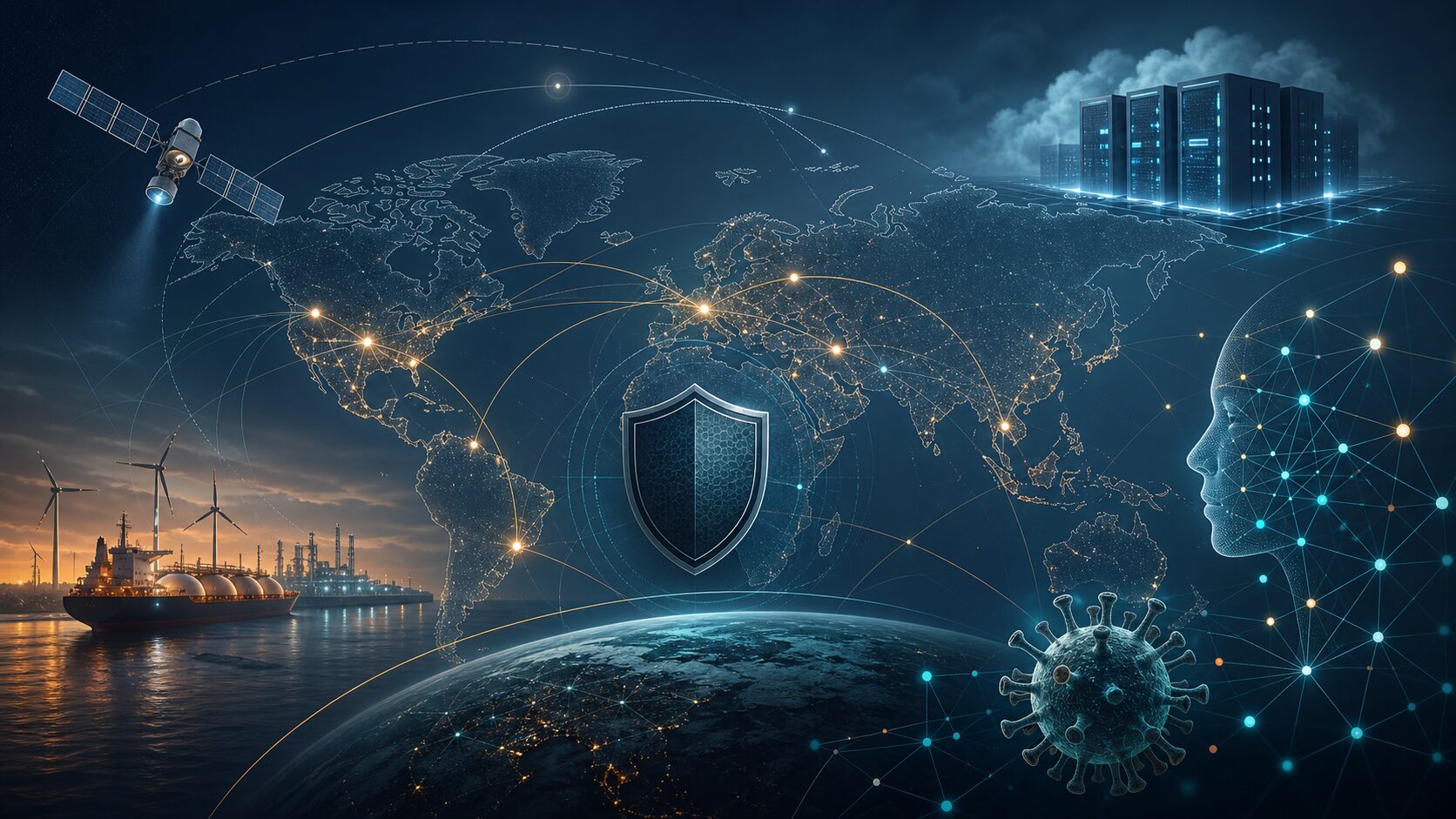
The world-news flow on 2026-06-17 was not a single-theme day. Ukraine, Russia’s fuel system, Finland’s security posture, Lebanon and Iran risk, European migration and trade policy, AI, robotaxis, pharmaceutical cyber risk, satellite infrastructure, and Ebola response in DR Congo all pointed to the same larger problem: resilience is becoming an economic issue as much as a political one.
The collected RSS sources show how quickly one form of pressure spreads into another. Military strain can affect fuel and insurance costs. AI infrastructure can reshape manufacturing expectations and workplace norms. A health emergency can become a trade and mobility problem. The following 12 stories organize the day by economic and social impact.
1. Ukraine’s deep strikes and Russian air defenses
CBS News and related coverage reported that Ukraine’s deeper strikes may be putting Russian air-defense missile stocks under unsustainable pressure. If that attrition continues, Russia faces a difficult allocation problem: protecting one set of strategic sites can expose another. Economically, demand for interceptors, repairs, and hardened logistics may rise. Socially, the normalization of long-range strikes keeps evacuation planning, power reliability, and public anxiety close to daily life.
2. Russia’s possible gasoline imports
Reuters reported that Russia may import gasoline by sea as shortages loom. The story matters because fuel is both a civilian necessity and a military input. A tighter gasoline market can raise transport costs, strain small businesses, and complicate regional distribution. For households, even the perception of scarcity can change behavior and test confidence in public management of basic supply.
3. Finland revisits nuclear-device restrictions
Reports said Finland backed steps to lift a total ban on nuclear weapons or nuclear devices in response to a more uncertain security environment. The change would not be only symbolic. It could require more defense planning, infrastructure review, and public communication about NATO obligations. The social question is whether citizens accept a broader deterrence posture as a necessary cost of security.
4. Israeli strikes on Lebanon keep regional risk high
BBC reported fresh Israeli strikes on Lebanon, with related coverage connecting the episode to wider Iran-linked tension. For markets, the risk channel runs through oil, shipping insurance, aviation routes, and investment caution. For communities near the conflict, the first impact is more direct: displacement risk, disrupted services, and fear that retaliation can arrive before diplomacy does.
5. Oil shifts from shortage anxiety to surplus risk
CNBC cited the IEA’s view that demand destruction and returning supply could shift the oil narrative from shortage to possible glut. Importing economies may welcome relief from fuel-driven inflation, while producer budgets and energy companies may face pressure if prices soften. The social impact is mixed: consumers may gain breathing room, but oil-dependent regions can face job and fiscal uncertainty.
6. EU migration reform and return hubs
Euronews reported that the European Parliament approved migration reforms allowing return-hub arrangements. The economic effects include border-management spending, asylum-processing capacity, and local-government burdens. The social stakes are higher than administration alone: the reform will be judged on whether it can reconcile border control, human rights, integration, and public trust.
7. Europe’s fear of a new China shock
Axios reported that concern over a new wave of Chinese export pressure is shaping EU trade policy. Lower-cost imports can help consumers, but they can also weaken local manufacturing and intensify political pressure for tariffs, subsidies, or procurement rules. The social issue is whether Europe can manage industrial transition without leaving workers and regions feeling exposed.
8. Robotaxis advance, but unevenly
The New York Times reported that Waymo’s driverless taxis will not reach many streets quickly, while Yahoo Finance and Axios coverage pointed to Uber and Lucid expansion in Houston. Autonomous mobility still depends on maps, regulators, insurance, fleet economics, and local tolerance for testing. The social test is not whether the technology works once, but whether it can be safe, useful, and trusted across many neighborhoods.
9. Nvidia and the social rules of AI
AP reported that Nvidia CEO Jensen Huang said society needs new social norms in the age of AI. That comment reflects a broader economic shift: AI infrastructure is now tied to chips, optical components, factories, and national industrial policy. Socially, schools, employers, and governments need practical rules for transparency, responsibility, and skills so adoption does not outpace trust.
10. Cyber extortion claims hit Novo Nordisk
Reuters reported that a hacking group claimed a major breach of Novo Nordisk and attempted a 25 million dollar extortion, with related coverage noting possible exposure of clinical-trial patient data. For the pharmaceutical sector, cyber risk is now operational, financial, regulatory, and reputational at the same time. For patients, the central issue is whether sensitive medical data is protected and whether companies explain incidents quickly and clearly.
11. Ariane 6 launches Amazon internet satellites
Space reported that a European rocket launched a heavy mission carrying Amazon internet satellites. The launch supports Europe’s commercial-space standing and gives satellite-internet providers more launch diversity. Economically, it touches launch services, spacecraft manufacturing, and ground networks. Socially, satellite broadband can improve connectivity, but it also raises questions about orbital congestion and dependence on private communications infrastructure.
12. Ebola risk in DR Congo
Al Jazeera reported that Africa CDC warned the Ebola outbreak in DR Congo could become one of the most severe on record, with conflict displacement complicating response. The economic risk includes border trade disruption, emergency health spending, and labor interruptions. The social risk is even more immediate: trust, vaccination, contact tracing, and safe access to affected communities determine whether containment works.
Economic Impact
The day’s stories show how risk now compounds across sectors. Energy expectations depend on war and diplomacy. AI expectations depend on chips, factories, and labor norms. Trade policy depends on strategic competition. Health and cyber incidents can move from specialist concerns to boardroom priorities. Businesses should treat resilience as a budget item, not a slogan.
Social Impact
The social thread is institutional trust. People need to believe that air defenses, fuel supply, migration systems, digital platforms, medical-data protections, satellite networks, and outbreak responses are prepared before failure becomes visible. Clear rules, honest communication, and practical readiness matter more than optimistic messaging.
Sources
- CBS News / Google News RSS
- Reuters / Google News RSS
- Metro / Google News RSS
- BBC / Google News RSS
- CNBC / Google News RSS
- Euronews / Google News RSS
- Axios / Google News RSS
- The New York Times / Google News RSS
- Yahoo Finance / Google News RSS
- AP News / Google News RSS
- Reuters / Google News RSS
- Space / Google News RSS
- Al Jazeera / Google News RSS